Modi and Netanyahu Signal Deeper Counterterror Alignment
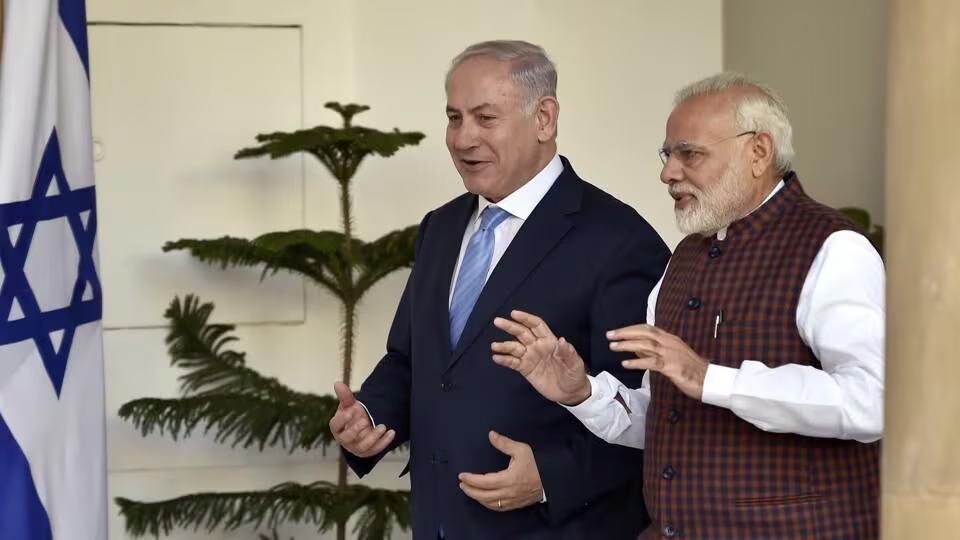
Israeli Prime Minister Benjamin Netanyahu spoke with Indian Prime Minister Narendra Modi on January 7, 2026, in their first direct engagement of the year. The conversation went beyond customary New Year greetings, reaffirming a shared and uncompromising position against terrorism while reviewing avenues to further strengthen bilateral cooperation. At a time of heightened volatility in West Asia, the call underscored political continuity, strategic trust, and a common security outlook between the two leaders.
India–Israel Ties: From Diplomatic Normalisation to Strategic Partnership
India and Israel established full diplomatic relations in 1992, but their engagement has expanded dramatically over the past decade. The relationship was formally elevated to a strategic partnership in 2017, reflecting growing convergence in defence, intelligence, technology, agriculture, and innovation. Israel has emerged as India’s third-largest defence supplier, playing a critical role in areas such as missile systems, unmanned aerial vehicles, precision-guided munitions, and cyber security infrastructure.
Economic ties have also broadened. Bilateral trade crossed $10 billion in 2025, encompassing pharmaceuticals, diamonds, agri-tech, renewable energy, and high-end manufacturing. What distinguishes the partnership, however, is its security-centric core, built on mutual threat perceptions, democratic values, and long-standing intelligence cooperation.
Substance of the January 2026 Conversation
During the call, Netanyahu briefed Modi on the implementation of the Gaza peace framework, while Modi reiterated India’s consistent support for a fair, negotiated, and sustainable peace in the region. Both leaders condemned terrorism in all its forms without qualification and agreed on the need for tighter global coordination against extremist networks.
They also reviewed priorities for advancing the strategic partnership, including defence co-production, technology transfers, and people-to-people engagement. Netanyahu’s expressed desire to meet Modi in person in the near future reflected the personal rapport that has often accelerated institutional cooperation between the two countries.
Counterterror Cooperation and Its Impact on West Asia Stability
India–Israel counterterrorism cooperation carries implications far beyond bilateral security. At its core lies enhanced intelligence sharing on transnational terror organisations such as ISIS, al-Qaeda, Hamas, and affiliated proxy groups. Israel’s operational experience in Gaza and India’s long-standing challenges linked to cross-border terrorism and radicalisation create a complementary intelligence ecosystem.
Technologically, Israeli surveillance platforms—ranging from satellite-based reconnaissance and aerostat radars to advanced cyber-defence tools—have strengthened India’s counterterror capabilities. India, in turn, has adapted Israeli tactical doctrines, including precision operations and rapid-response frameworks. These capabilities, when integrated through multilateral arrangements like I2U2 (India–Israel–UAE–US), contribute to a wider regional deterrence architecture in West Asia.
Strategically, this cooperation indirectly constrains the operational space of Iran-backed non-state actors such as Hamas and Hezbollah by improving detection, disruption, and diplomatic coordination. It also supports broader stabilisation efforts linked to economic corridors like the India–Middle East–Europe Economic Corridor (IMEC), which aims to reduce conflict drivers through connectivity and growth. By offering an alternative to China’s Belt and Road Initiative, the partnership also reshapes regional alignments in favour of transparency and security-led development.
Balancing Gains with Geopolitical Sensitivities
Deeper India–Israel security ties inevitably require careful diplomatic calibration. India’s traditional engagement with Arab states and Iran means overt alignment risks misperception. However, India’s emphasis on countering non-state terrorism rather than targeting states has helped preserve its multi-aligned posture while sustaining strategic depth with Israel.
A Partnership Shaping Regional Security
The Modi–Netanyahu conversation reflects more than bilateral goodwill; it highlights a maturing strategic axis with regional consequences. As terrorism, cyber threats, and proxy conflicts continue to destabilise West Asia, India–Israel cooperation offers a model of proactive security engagement anchored in technology, intelligence, and shared values. If managed with diplomatic balance, this partnership can contribute meaningfully to a more stable, interconnected, and resilient West Asian order.