Nadella’s Quiet Warning on the AI Spending Boom
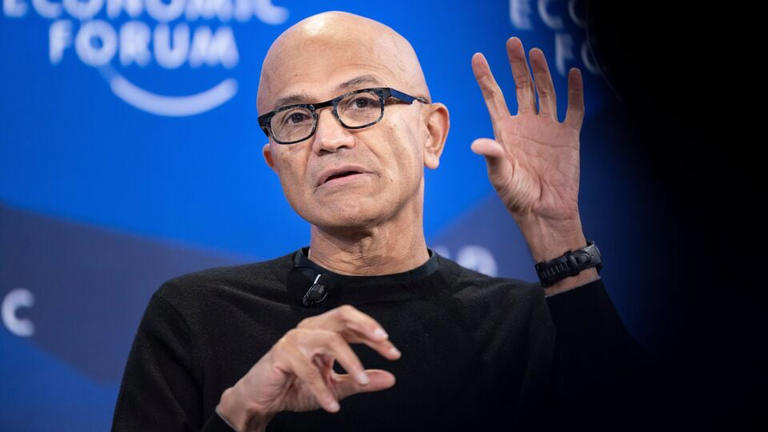
When Satya Nadella said the industry is “one innovation away from the entire regime changing,” he put words to a risk many executives prefer not to emphasize. At a time when companies are committing tens of billions of dollars to new AI data centers, his comment suggests the current trajectory may not be permanent.
The dominant assumption today is simple: bigger models require bigger compute clusters. That belief has fueled an arms race in infrastructure, with hyperscalers locking in massive GPU orders, expanding power capacity, and building facilities designed to handle unprecedented workloads. The bet is that scale will continue to define competitive advantage.
But that bet carries exposure. If a breakthrough reduces compute needs dramatically, some of today’s infrastructure could become less valuable than expected. A shift in model architecture, more efficient inference systems, or entirely new chip designs could lower the cost of delivering intelligence. History offers many examples of capital-heavy transitions where technological leaps arrived sooner than anticipated.
Nadella’s point is not that investment is wrong. It is that technological regimes do not last forever. AI progress may depend not only on more hardware, but on smarter algorithms and more efficient systems.
For companies signing enormous long-term contracts, the question is whether flexibility has been built into the strategy. In a field evolving this quickly, adaptability may matter more than sheer scale.