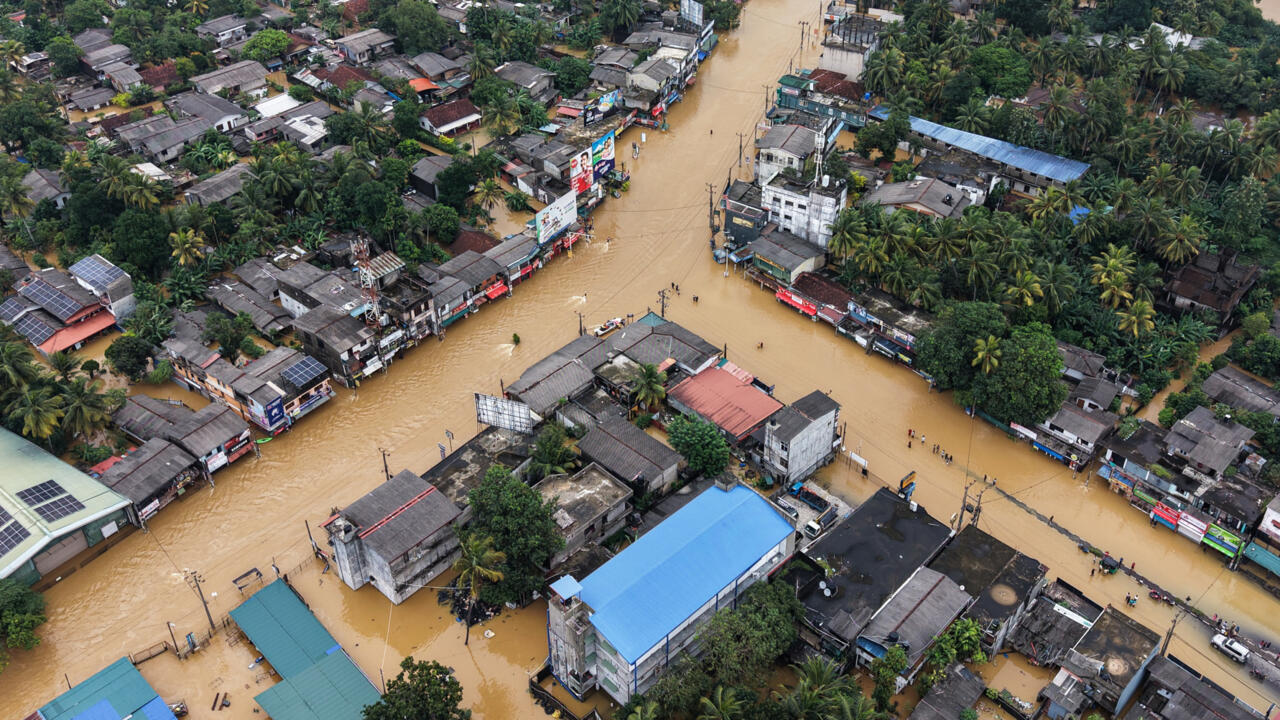
Sri Lanka imposes state of emergency as floods and landslides wreak havoc
Sri Lanka is reeling from catastrophic floods and landslides that have claimed more than 330 lives, marking one of the deadliest weather-related disasters the nation has faced in recent years.
Over 200 people remain unaccounted for, while nearly 20,000 houses have been wiped out, forcing around 108,000 residents to take refuge in government-run shelters, according to the Disaster Management Centre.
Authorities said that close to one-third of the country has lost access to electricity and clean water following the devastation caused by Cyclone Ditwah, prompting the government to declare a state of emergency.
President Anura Kumara Dissanayake described the situation as the “most severe natural calamity” in Sri Lanka’s history, adding that the level of destruction is so vast that the cost of rebuilding will be enormous.
Evacuation alerts continue in several districts as the Kelani River rises dangerously fast.
A woman from central Sri Lanka told the BBC that about 15 homes in her community were crushed under mud and massive rocks, leaving no survivors.
The worst-hit districts include Kandy and Badulla, where many regions are still inaccessible.
“We lost two people in our village… the rest are staying in a temple and the only house that hasn’t collapsed,” said Saman Kumara from Maspanna village in Badulla.
“We can’t leave, and no help can reach us because every road is blocked by landslides. There’s no food left, and clean water is almost gone,” he told the News Center website over the phone.
Police also confirmed that 11 elderly residents at a care home in Kurunegala died after the facility was inundated on Saturday.
Following a tense 24-hour rescue mission, a passenger recounted to AFP how navy personnel helped them climb onto the roof of another building.
“We were extremely fortunate… while we were on the roof, part of it gave way. Three women fell into the water but were pulled back to safety,” said WM Shantha.
A Getty Images photo showed residents using makeshift rafts to navigate floodwaters as torrential rains from Cyclone Ditwah swept across Colombo on 29 November 2025.
The government has appealed for international assistance and urged Sri Lankans living abroad to contribute financially to relief efforts.
Cyclone Ditwah skimmed past the island’s eastern coastline on Friday before moving away.
Although Sri Lanka is currently in its monsoon season, such intense weather is considered highly unusual.
The island’s worst flooding in the 21st century occurred in June 2003, when 254 people died and hundreds of thousands were displaced.
This disaster coincides with severe flooding across Southeast Asia, affecting millions in Indonesia, Malaysia, and Thailand.