Yemen Unrest: Why Saudi Arabia & UAE Are Clashing After Bombing
Yemen conflict: The UAE is taking back its troops from Yemen after Saudi Arabia bombed a weapons cache sent by Abu Dhabi for a seperatist group.
In light of the latest developments in Yemen, the United Arab Emirates (UAE) has announced it is ending the deployment of its remaining counterterrorism personnel in the country. The withdrawal, it said, will be carried out voluntarily, in coordination with partners, and in a way that guarantees the safety of its forces.
The announcement by the UAE Ministry of Defence followed pm Tuesday an earlier statement by the Ministry of Foreign Affairs that addressed the evolving situation in Yemen and clarified the nature of the UAE military presence there.
It said, "This statement is issued with reference to the statement made on Tuesday, 30 December 2025, by the Ministry of Foreign Affairs of the United Arab Emirates regarding the ongoing developments in the Republic of Yemen, and the facts it outlined concerning the presence of the UAE Armed Forces in Yemen within the framework of the Arab Coalition to Support Legitimacy."
Why is UAE pulling troops from Yemen?
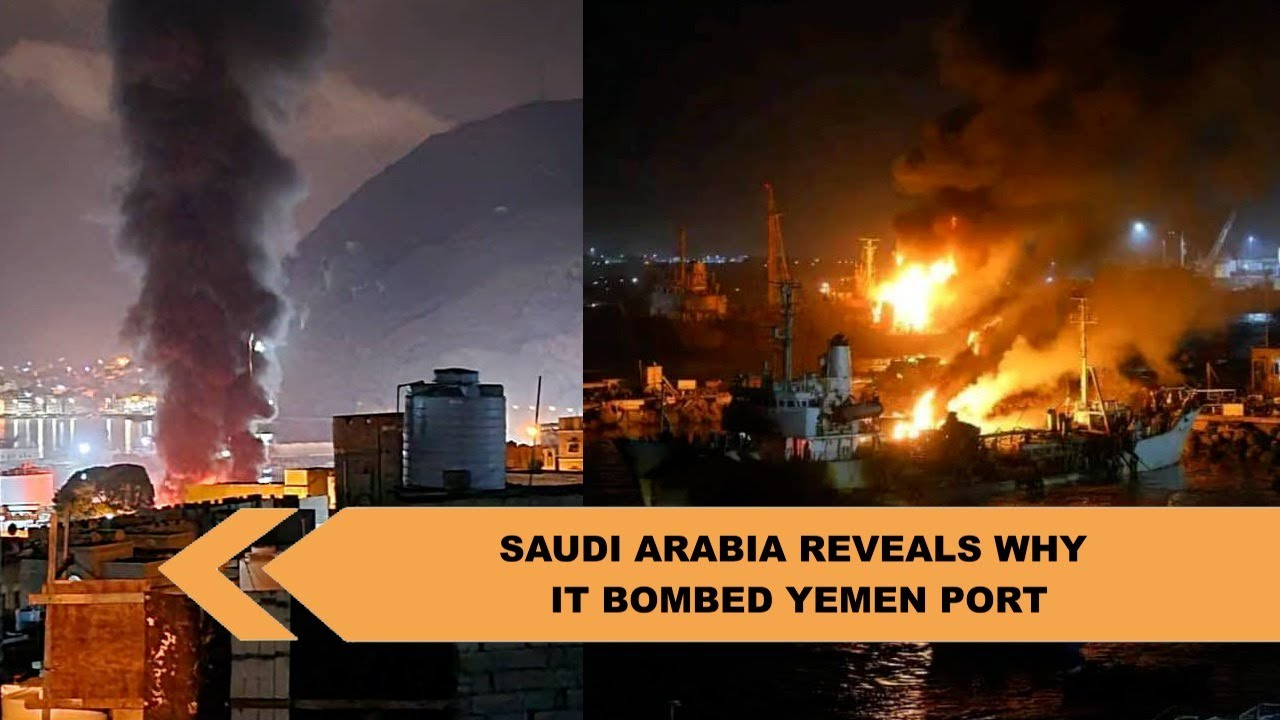
The decision came amid rising regional friction after Saudi Arabia carried out air strikes on Yemen’s port city of Mukalla, hitting what it described as a shipment of weapons sent from the UAE to separatist forces. The attack underscored the strategic importance of Yemen’s coastline along major global trade routes and heightened concerns about instability in the Persian Gulf region. Shortly afterwards, the UAE confirmed it would pull its forces out of Yemen.
At the same time, the Southern Transitional Council, STC, a separatist group backed by the UAE, moved to consolidate control over large parts of southern and eastern Yemen. In recent weeks, STC forces seized most of the provinces of Hadramout and Mahra, including key oil installations.
A long running civil war
Yemen has been engulfed in civil war for more than a decade, driven by deep rooted political and sectarian divisions and intensified by the involvement of regional powers. The Iran aligned Houthi movement controls much of the country’s most densely populated areas, including the capital, Sanaa. In contrast, a loose coalition led by Saudi Arabia and the UAE has supported the internationally recognised government based in the south.
The conflict has devastated the economy and triggered one of the world’s worst humanitarian crises. Although large scale fighting eased after 2022 as the war settled into a stalemate, recent events have disrupted the fragile balance among factions opposed to the Houthis.
About STC
The current escalation has its roots in the origins of the war, which began in 2014 when Houthi forces advanced from their northern base in Saada and seized Sanaa, forcing the recognised government into exile. Saudi Arabia and the UAE intervened the following year in an effort to reinstate the government.
Today’s clashes are largely between the STC and government forces allied with local tribes, despite both sides nominally belonging to the broader anti-Houthi camp. The STC, founded in April 2017, has become the dominant power in southern Yemen with extensive financial and military backing from the UAE. Its stated aim is the re-establishment of an independent South Yemen, which existed between 1967 and 1990.
Recent advances have strengthened the STC’s position across the south, potentially increasing its leverage in any future negotiations to end the conflict. The group has consistently argued that any political settlement must include the right of self determination for southern Yemen. It is led by Aidarous al Zubaidi, who also serves as vice president of Yemen’s Presidential Leadership Council.
STC-aligned forces now hold sway over much of southern Yemen, including major ports, islands, and infrastructure. Opposing them in the latest fighting are units of the Yemeni military loyal to the recognised government, supported by the Saudi-backed Hadramout Tribal Alliance.
Hadramout, Yemen’s largest and oil-rich province, stretches from the Gulf of Aden to the Saudi border and is a crucial energy supplier for the south. Earlier this month, STC fighters advanced into the province and took over major facilities, including PetroMasila, the country’s largest oil company, following brief clashes with government and tribal forces.
These moves followed the seizure of the PetroMasila facility by the Hadramout Tribal Alliance in late November, an action intended to pressure the government over revenue sharing and public services. The STC appeared to use that dispute as an opportunity to expand its own control over the province and its resources.
Escalation and Saudi Arabia's bombing
After consolidating its position in Hadramout, STC forces moved east into Mahra, near the border with Oman, capturing a key border crossing. In Aden, they also took over the presidential palace, the seat of the Presidential Leadership Council.
Saudi forces, meanwhile, withdrew earlier this month from several bases in Aden as part of what officials described as a repositioning strategy. Days later, Saudi Arabia carried out air strikes in Hadramout, which analysts interpreted as a warning to the separatists to stop their advance and pull back from Hadramout and Mahra.
What had been a tenuous and unstable equilibrium has now been decisively broken, raising fresh doubts about the prospects for de escalation in Yemen.