Meta's $25 Billion Privacy Penalty Shakes Big Tech
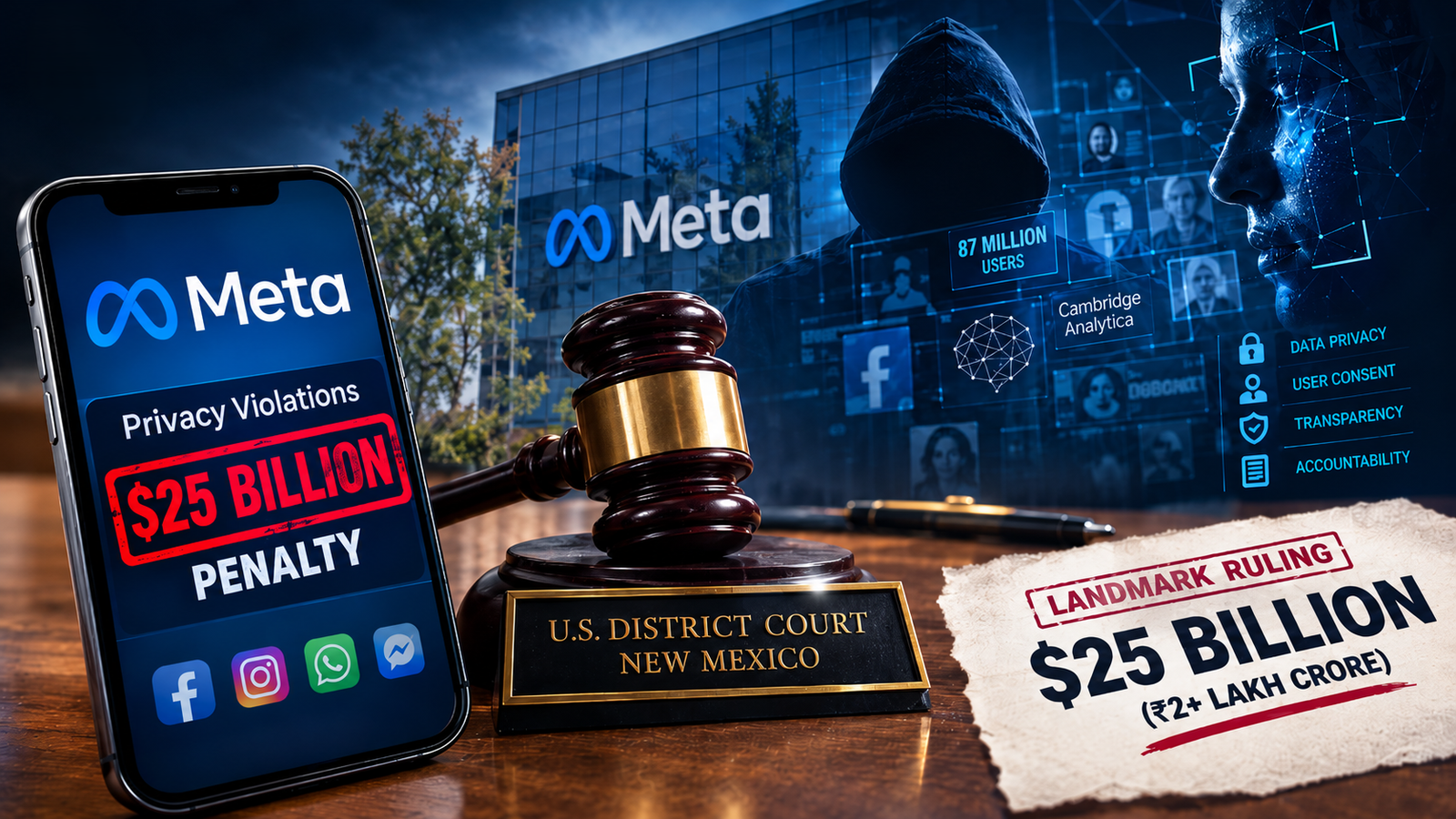
In a landmark ruling, a US court has ordered Meta Platforms to pay $25 billion, exceeding ₹2 lakh crore, for misleading consumers about data privacy. The judgment represents one of the largest corporate penalties in American history, raising fundamental questions about Big Tech accountability.
On October 21, 2026, New Mexico District Judge Francis Mathew imposed the penalty following a jury verdict identifying 43,899,725 violations of the state's Unfair Practices Act. The violations concerned misleading representations about personal information, third-party access and content moderation.
The case originated from the Cambridge Analytica scandal, in which personal data belonging to as many as 87 million Facebook users was harvested through a third-party application. The controversy exposed weaknesses in user consent, data governance and platform transparency.
New Mexico Attorney General Raúl Torrez pursued the litigation independently, arguing that Meta systematically misrepresented its privacy practices. Jurors found 26 company statements misleading, establishing liability across millions of statutory violations rather than identifying 43 million separate data breaches.
The financial implications are extraordinary. Although statutory penalties could have exceeded $219 billion, the judge imposed $25 billion. Meta plans to appeal, challenging both the legal findings and proportionality of the penalty. Legal experts believe the amount could be reduced.
The ruling also carries implications for India's digital economy. Under the Digital Personal Data Protection framework, enterprises must strengthen consent management, transparency, data governance and accountability. Misleading privacy assurances could create significant regulatory and reputational exposure.
The larger message is unmistakable: data privacy has become a boardroom accountability issue. Technology companies can no longer rely solely on privacy policies and compliance declarations. Continuous monitoring, independent audits, verifiable consent and responsible data handling are essential. Meta's legal setback demonstrates that digital trust must be earned through demonstrable practices, not corporate promises.