Deepfakes Take Aim at America’s Midterms
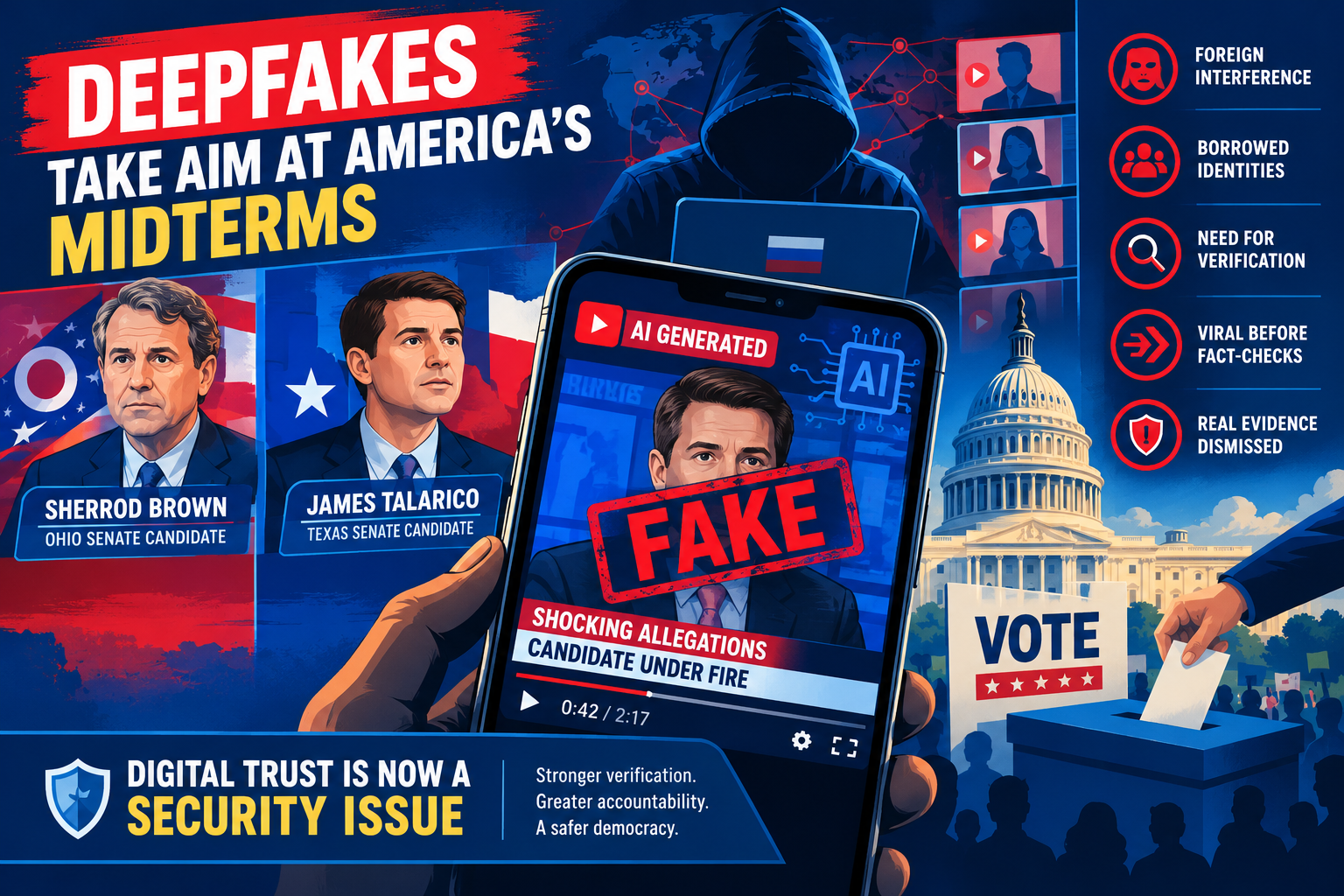
Days before the November 3 U.S. midterm elections, AI-generated videos are being used as tools of political deception. Fabricated accusations against Senate candidates have raised concerns about foreign interference and about voters’ ability to tell real footage from manufactured footage.
Two Democratic Senate candidates, Sherrod Brown in Ohio and James Talarico in Texas, have been hit by videos making false allegations. Researchers say the clips appear designed to damage reputations and sway undecided voters in the final days of the campaign.
The video against Brown is made to look like a TV news segment and uses photos of Haya Akbik, his former intern, and other former staffers. Akbik has flatly denied saying anything attributed to her. Her case shows how private citizens can be pulled into a disinformation campaign without their knowledge.
The Talarico video shows a man posing as a former student making false claims. The New York Times reported that it was produced by a covert Russian group, which shows how synthetic media can be used to deepen political divisions and weaken trust in democratic institutions.
Disinformation researchers, including Clemson University’s Darren Linvill, see the signature of Storm-1516. That Russian-linked network targeted Kamala Harris and Tim Walz in 2024. The same accounts that pushed its earlier propaganda were also sharing the new videos.
Dartmouth deepfake specialist Hany Farid concluded that both clips were likely generated or altered with AI. Even a crude fake can shape opinion if it spreads quickly enough: the Talarico video passed 500,000 views before researchers exposed it.
X removed the original posts and suspended the accounts behind them, but copies kept circulating. Taking down content after it goes viral rarely undoes the damage, because by then the false claim is already part of the conversation.
Key Takeaways
- Trust in elections is at stake. AI-made falsehoods can distort how voters see candidates and weaken confidence in the electoral process.
- Anyone’s identity can be borrowed. Ordinary people’s names and photos can be used to give fabricated claims a credible face.
- Verification tools matter more. Forensic analysis, content provenance and authenticity checks are becoming essential defenses.
- Falsehoods outpace fact-checks. A viral fake can reach hundreds of thousands of viewers before anyone confirms it is false.
- Real evidence can be waved away. As deepfakes become common, people can more easily dismiss genuine recordings as fake.
Digital Trust Is Now a Security Issue
The threat goes beyond elections. AI impersonation can target banks, government messages, company executives and private individuals. Countering it will take platforms, regulators, researchers and independent fact-checkers working together.
The lesson is that seeing and hearing something no longer proves it is real. As synthetic media improves, societies will need routine verification, reliable digital evidence and real accountability to protect public trust and democratic institutions.