
Nvidia CEO Exit Shakes AI Industry
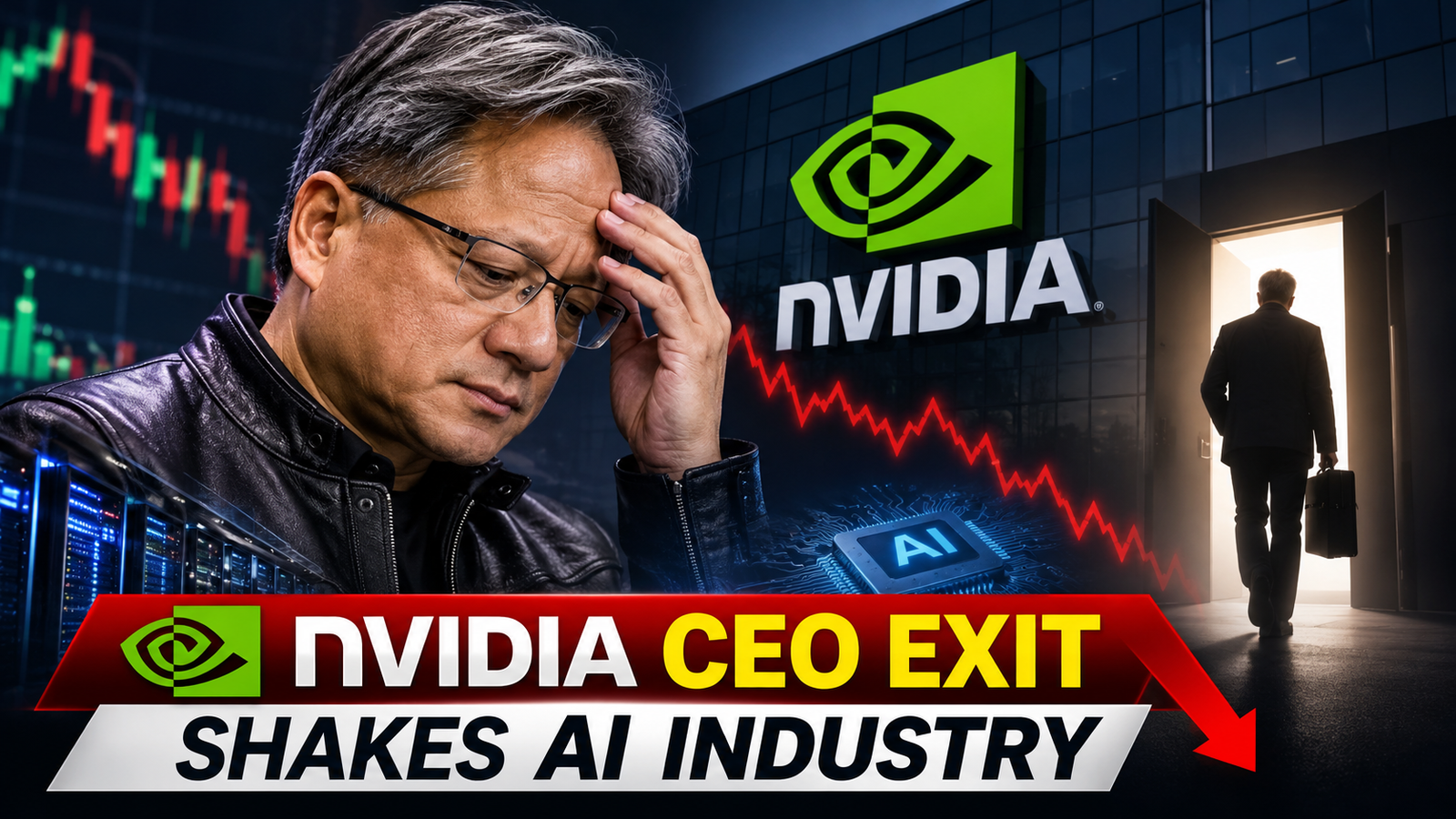
Nvidia faces an unprecedented leadership crisis following reports that co-founder Jensen Huang resigned as president, CEO, and board member on November 12, 2026, ending his 33-year tenure.
The reported departure followed an independent board investigation into Huang's admitted extramarital affair and allegations involving a woman suspected of connections to Chinese intelligence.
According to the reports, Nvidia's board convened Wednesday evening before announcing Huang's resignation Thursday morning, ahead of Wall Street's opening bell.
The controversy intensified after The New York Times reportedly disclosed another relationship involving Huang and a senior Nvidia executive, raising additional corporate governance concerns.
Separately, questions emerged regarding Alice Huang's reported association with Megaspeed, a Singapore-based data center company examined over China's access to advanced Nvidia processors.
However, allegations of espionage or improper technology transfers involving Huang remain unproven. The distinction between personal misconduct allegations and national security violations is critically important.
Huang co-founded Nvidia in 1993, transforming graphics processing technology originally designed for gaming into the foundation of today's artificial intelligence revolution.
Under his leadership, Nvidia became a dominant supplier of AI accelerators, powering hyperscale data centers, generative AI platforms, and advanced computing infrastructure worldwide.
The company's financial expansion has been extraordinary, with reported annual revenue rising from $27 billion in fiscal 2023 to $215.9 billion in fiscal 2026.
Its data center division reportedly generated $89 billion during the second quarter of fiscal 2027, highlighting Nvidia's growing dependence on AI infrastructure spending.
Nevertheless, investor confidence has weakened amid concerns that massive investments in GPUs, data centers, and AI platforms may not deliver sustainable returns.
Nvidia's market valuation reportedly retreated from approximately $5.8 trillion as technology stocks faced selling pressure and investors reassessed AI-related capital expenditure.
Political uncertainty surrounding semiconductor export controls, data center regulations, and US-China technology competition has further complicated the company's outlook.
Meanwhile, competitors AMD, Broadcom, and Qualcomm reportedly gained during early trading, suggesting investors were reassessing competitive opportunities within the semiconductor industry.
The larger question is whether Nvidia can sustain its technological dominance amid leadership uncertainty, geopolitical tensions, and AI investment concerns. Its future will depend on governance, innovation, supply-chain resilience, and measurable returns from the global AI boom.