
UK Regulator Bets on Quantum to Fight Fraud
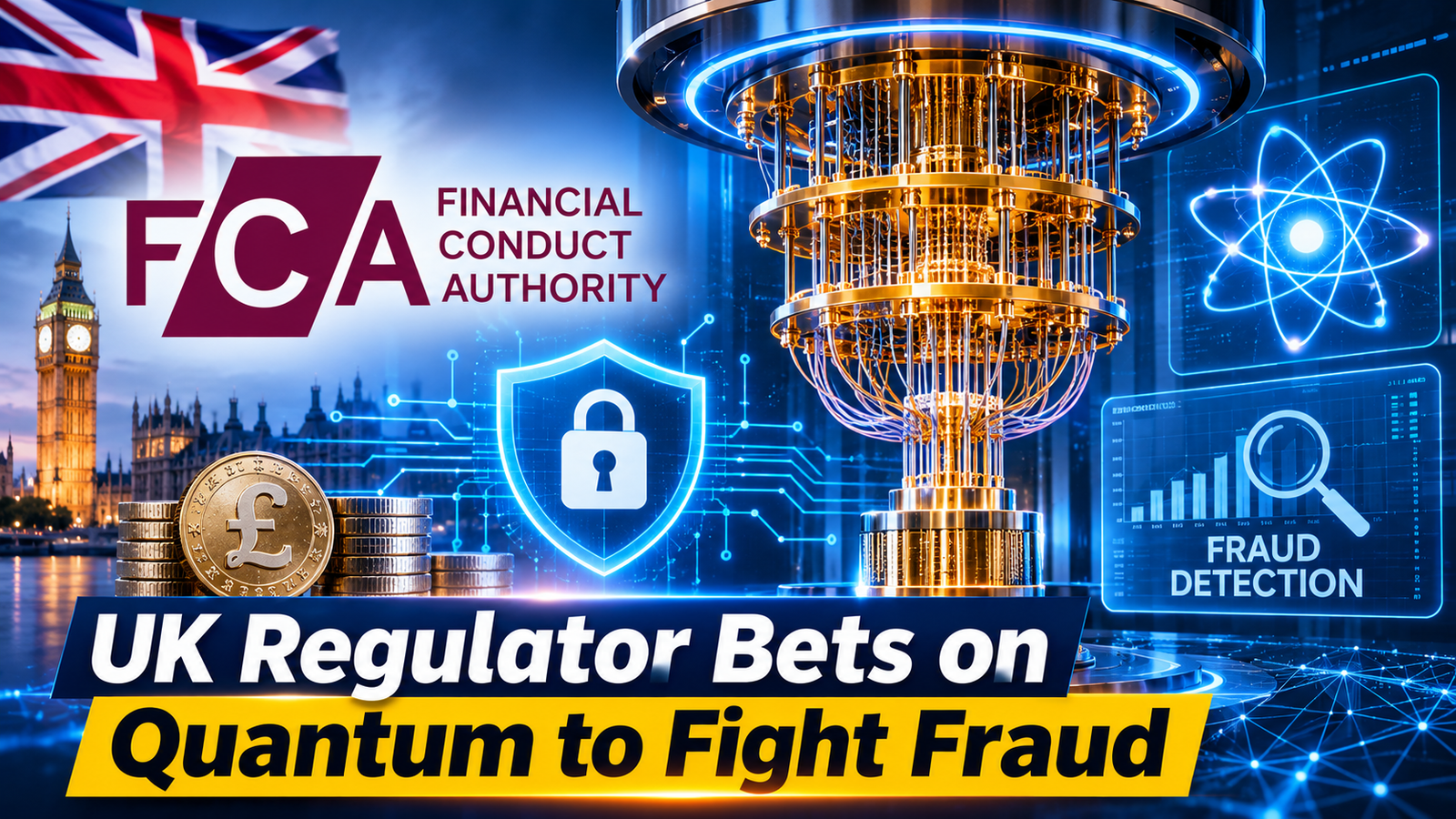
The UK's Financial Conduct Authority (FCA) is exploring quantum computing as a potential weapon against financial crime, signalling a new direction in combating money laundering, banking fraud, and increasingly sophisticated financial threats.
The regulator has announced the Quantum Experimentation Group (QEG), a pioneering initiative bringing together financial institutions, quantum technology providers, and national research laboratories. Scheduled to launch in the first quarter of 2027, it aims to investigate practical quantum applications.
The initiative will initially focus on quantum machine learning (QML) to identify suspicious financial transactions, detect hidden fraud patterns, and potentially improve anti-money laundering systems. Unlike conventional approaches, quantum techniques could eventually help analyse complex relationships across large transaction networks.
To overcome data-access challenges, the FCA will provide participants with synthetic datasets, enabling controlled experimentation without exposing actual customer information. Researchers will compare quantum approaches with conventional computing techniques to assess their effectiveness.
Jessica Rusu, FCA's Chief Data, Information and Intelligence Officer, emphasised the importance of early experimentation to identify where quantum technologies could deliver meaningful improvements. The initiative will also help regulators understand technical limitations, operational challenges, and future regulatory implications.
British banks are already exploring similar opportunities. NatWest has joined quantum innovation research focused on financial crime, while Lloyds Banking Group collaborated with IBM to investigate quantum-powered detection of money mule accounts, a growing concern across international banking networks.
However, quantum computing remains an emerging technology, with practical limitations involving hardware reliability, scalability, and processing costs. Its superiority over established fraud detection systems has not yet been demonstrated broadly. Financial institutions must therefore balance experimentation with cybersecurity resilience and preparations for post-quantum cryptography.
For India, the initiative offers an important lesson. As digital payments, UPI transactions, synthetic identity fraud, and money mule networks expand, quantum-assisted analytics could eventually complement AI-powered fraud detection. The real opportunity lies in combining advanced computing, behavioural intelligence, secure digital identities, and regulatory collaboration to build a more resilient financial ecosystem.