

Artificial intelligence identity verification strengthens patient monitoring and prevents errors in modern hospitals
Hospitals around the world are adopting advanced artificial intelligence systems to monitor patient vitals in real time. These early warning systems, often called digital patient monitors, are designed to detect sudden changes in heart rate, oxygen levels, blood pressure and other critical health indicators. As these tools evolve, one technology in particular is emerging as a key safety layer. This technology is known as FaceOff.
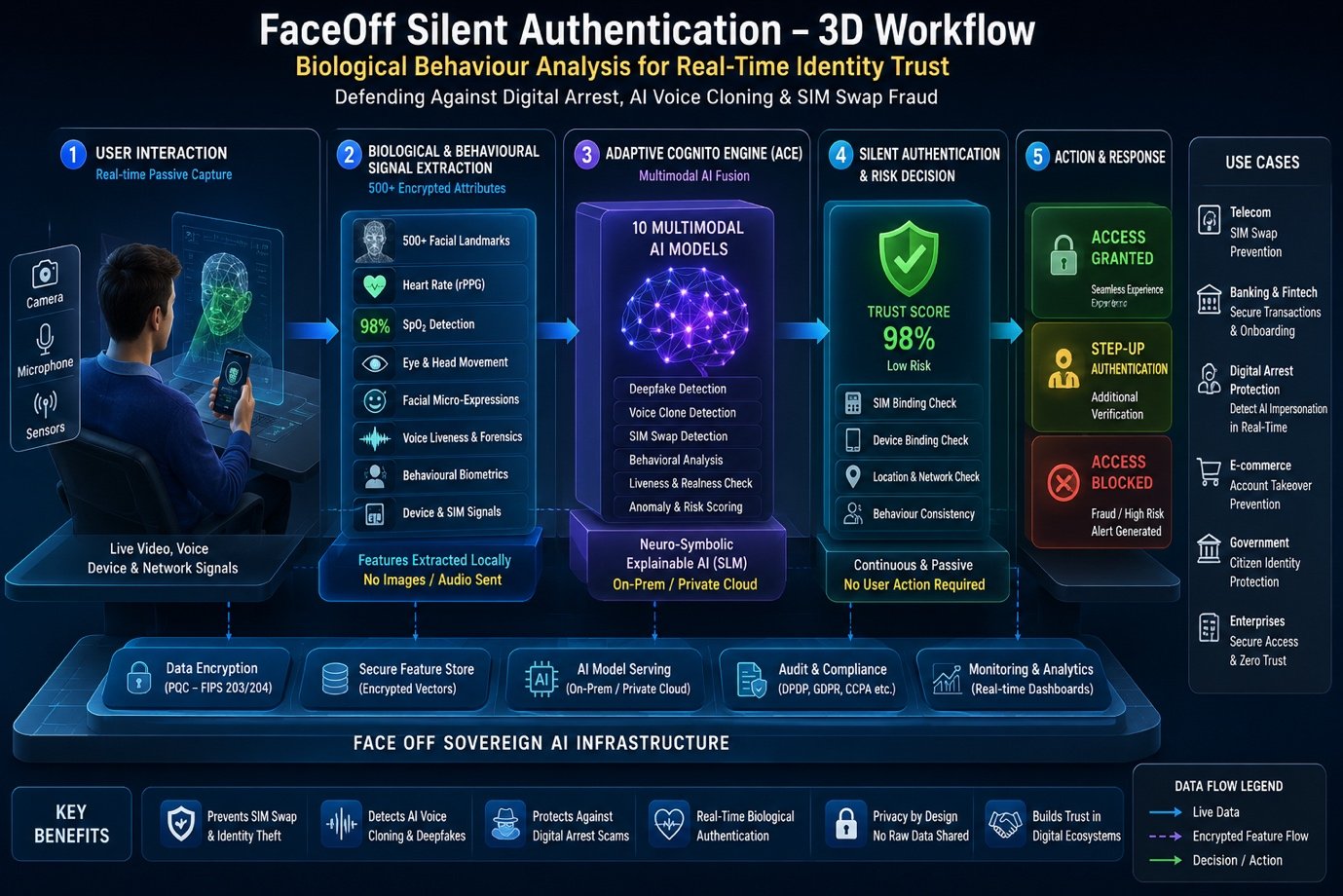
FaceOff is an identity authentication and risk intelligence platform that works alongside patient monitoring systems to eliminate errors caused by misidentification and unauthorized access. While wireless medical sensors continuously track patient conditions, FaceOff ensures that every alert, medical decision and clinical action can be traced back to the correct verified person.
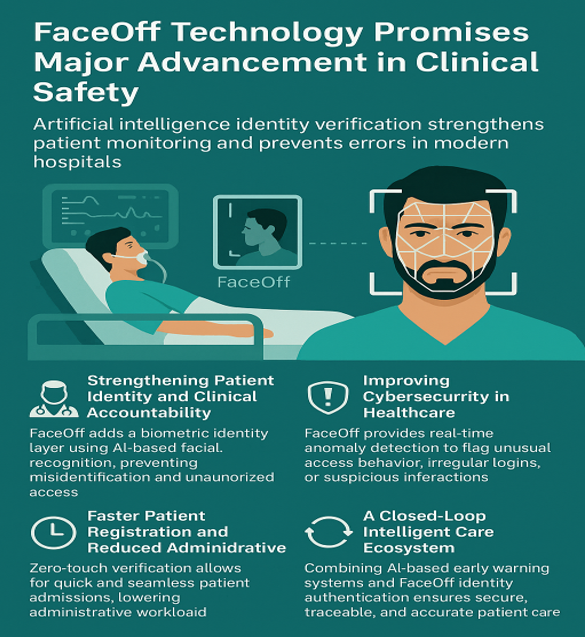
Strengthening Patient Identity and Clinical Accountability
One of the biggest challenges in modern hospitals is the risk of patient mix ups, impersonation attempts and documentation mistakes. With fast moving clinical activity and heavy workloads, even small identification errors can lead to serious consequences.
FaceOff addresses this risk by adding a biometric identity layer that verifies doctors, nurses and caregivers the moment they access patient dashboards. The system uses artificial intelligence based facial recognition along with a liveness check to confirm that the person logging into the system is exactly who they claim to be. This prevents unauthorized users from viewing or altering medical data and reduces the chance of clinical actions being assigned to the wrong staff member.
By combining real time patient monitoring with verified identity assurance, FaceOff creates complete accountability for every medical decision.
Improving Cybersecurity in Healthcare
Healthcare systems are increasingly targeted by data breaches and internal misuse. FaceOff brings an added layer of security through a real time anomaly detection engine. This engine constantly examines access behavior patterns and can flag unusual activity, irregular login attempts or suspicious interactions with patient records.
Hospitals can respond immediately to potential risks before damage occurs. In a time when cybercrime is becoming more sophisticated, this level of automated oversight is considered essential.
Faster Patient Registration and Reduced Administrative Burden
FaceOff also simplifies the admission process through what it calls a zero touch verification method. Instead of lengthy paperwork or manual identity checks, the system can verify a patient in a matter of seconds. This reduces waiting times, shortens queues and lowers the administrative workload for hospital staff.
For patients, the process feels seamless. For hospitals, it creates a more organized and efficient intake system.
A Closed Loop Intelligent Care Ecosystem
When combined with artificial intelligence based early warning systems, FaceOff creates what experts describe as a closed loop care ecosystem. Wireless sensors monitor vital signs. The early warning dashboard alerts staff to any risk. FaceOff ensures that the person responding to the alert has verified identity authentication. Every step is secure, traceable and accurate.
This reduces the possibility of human error, strengthens clinical decision making and improves overall patient safety. As hospitals move toward advanced digital care models, technologies like FaceOff are expected to play a central role.
A Foundation for the Future of Healthcare
Healthcare leaders say that the future of medicine will depend on strong identity systems that protect both patients and staff. With the increasing use of automation, artificial intelligence and remote monitoring, the need for trustworthy verification is greater than ever.
FaceOff positions itself as that trust layer. It promises reliable identity confirmation, better cybersecurity, faster workflows and complete transparency in clinical operations.
As hospitals aim for safer and more autonomous healthcare delivery, FaceOff is poised to become one of the most important technologies supporting next generation patient care.