

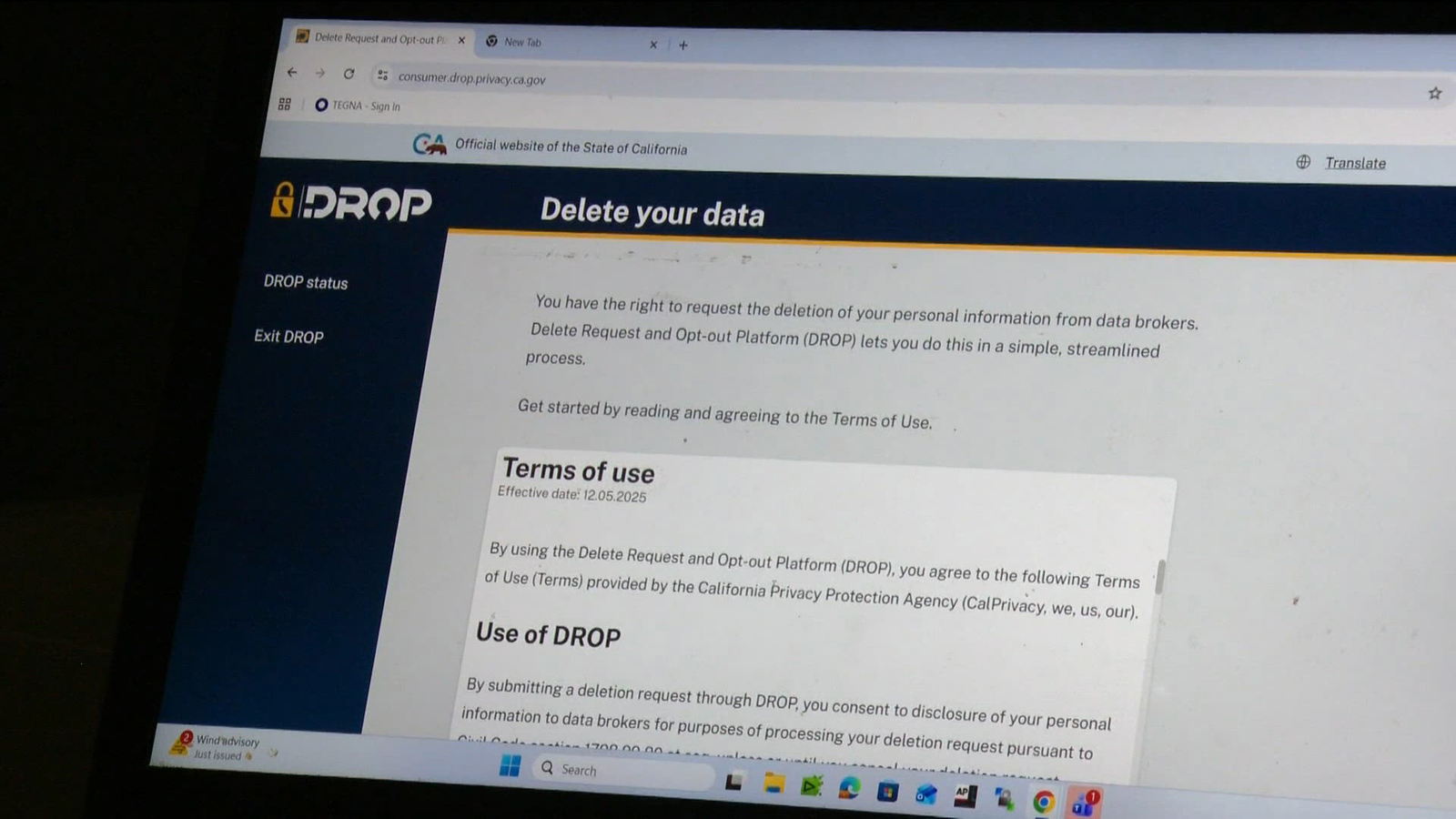
California has entered a new era of privacy enforcement with the rollout of the Delete Request and Opt-out Platform (DROP) under the California Delete Act (SB 362). The new framework transforms consumer privacy from a manual, company-by-company process into a centralized, technology-driven compliance model. Beginning August 1, 2026, every registered data broker must connect to the state-operated DROP platform, retrieve verified consumer deletion requests at least every 45 days, process them within the prescribed timeline, and maintain verifiable audit records.
The Delete Act closes a longstanding gap in California's privacy regime. Although the California Consumer Privacy Act (CCPA) and the California Privacy Rights Act (CPRA) granted consumers the right to delete their personal information, individuals previously had to contact each data broker separately. With DROP, consumers submit a single verified deletion request, which is automatically distributed to every registered data broker, making privacy rights significantly easier to exercise and far more enforceable.
| Milestone | Date | Requirement |
|---|---|---|
| DROP Platform Launch | January 1, 2026 | Consumers can begin submitting centralized deletion requests. |
| Operational Compliance Begins | August 1, 2026 | Registered data brokers must retrieve and process DROP requests every 45 days. |
| Independent Compliance Audits | January 1, 2028 | Mandatory third-party privacy compliance audits commence. |
| Cybersecurity Certifications | April 1, 2028 | Companies with annual revenues exceeding US$100 million (2026 revenue threshold) must submit cybersecurity audit certifications. |
The operational impact on businesses is substantial. Organizations must continuously discover personal data across multiple systems, execute deletion requests across internal databases and cloud environments, propagate deletions to downstream vendors and service providers, validate completion, and maintain immutable records demonstrating compliance. Privacy management is evolving from an occasional legal exercise into a continuous operational discipline supported by automation.
California has paired these requirements with strong enforcement powers. Organizations that fail to honor valid deletion requests may face penalties of US$200 per consumer, per day, while repeated non-compliance can trigger regulatory investigations, formal audits, and significant financial settlements. The emphasis has shifted from policy documentation to demonstrable execution and measurable accountability.
The California Delete Act represents one of the clearest signals yet that the future of privacy regulation lies in automated compliance rather than manual administration. Regulators increasingly expect organizations to prove not merely claim that personal data can be located, verified, deleted, and audited across increasingly complex digital ecosystems.
For enterprises, this creates a new technology imperative. Traditional privacy workflows based on spreadsheets, emails, and manual ticketing systems will struggle to meet recurring regulatory obligations. Organizations will require AI-powered privacy platforms capable of automated data discovery, identity verification, consent management, deletion orchestration, vendor coordination, and real-time compliance reporting supported by immutable audit trails.
The implications extend far beyond California. Similar privacy frameworks are emerging globally, including India's Digital Personal Data Protection (DPDP) Act, the European Union's GDPR, and other regional data protection laws. Collectively, they signal a broader transition toward privacy-by-design, Zero Trust data governance, and continuous compliance monitoring.
Enterprises that invest early in intelligent privacy automation will not only reduce regulatory risk but also strengthen customer trust, improve operational efficiency, and build resilient digital governance frameworks. In the AI era, privacy is no longer simply about protecting personal information it is becoming a strategic capability that underpins trust, compliance, and long-term business competitiveness.